
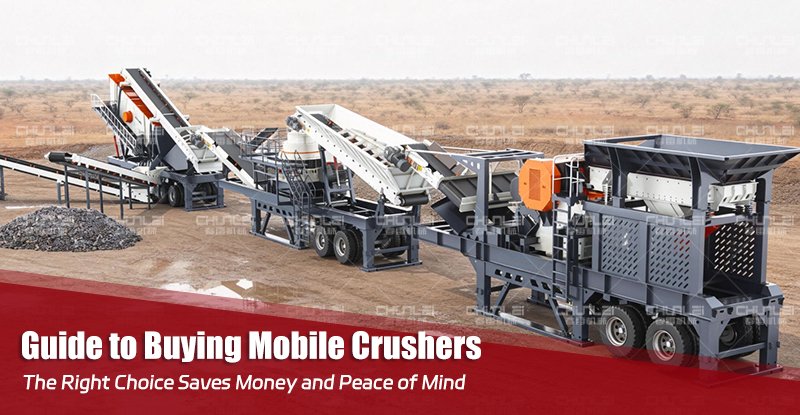
Guide to Buying Mobile Crushers: The Right Choice Saves Money and Peace of Mind
What is the difference between tracked and wheeled mobile crushers?
When choosing a mobile crusher, many people prioritize ease of relocation; however, the true measure of the equipment’s performance is how well it matches the specific on-site operating conditions. If the model is undersized, output will fall short; if the configuration is unsuitable, issues such as material clogging, rapid wear, and inconsistent product quality are likely to arise.
Therefore, beyond price and nominal output, key factors to consider include material hardness, maximum feed size, clay content, desired product particle size, and the compatibility of the screening and recirculation systems. Only when these parameters are properly aligned can a mobile crusher truly deliver its full production potential.
What is a tracked mobile crusher?
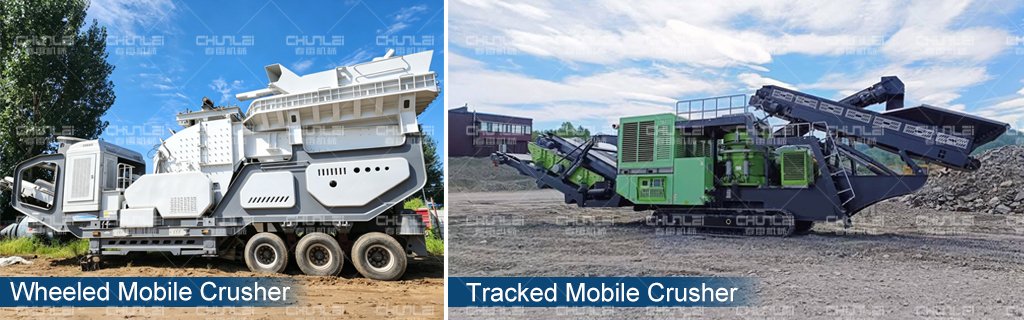
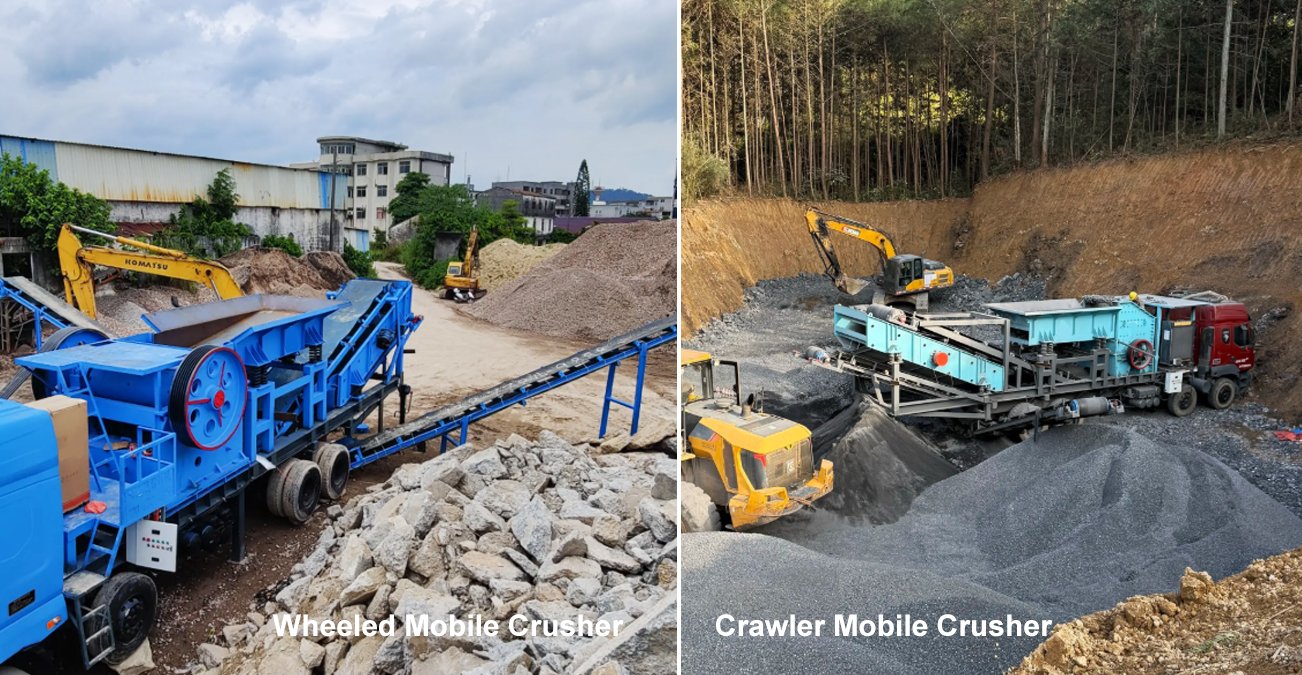
Tracked mobile crushers utilize a crawler chassis and can typically move around the job site under their own power.
They are better suited for:
Mining faces
Quarries
Mountainous projects
Muddy or soft terrain
- Uneven ground
- Operations requiring frequent relocation within the same project site
Their key feature isn’t high travel speed, but rather the ability to self-adjust their working position within complex terrain.
CHUNLEI tracked units integrate the crusher, feeder, conveyor, power unit, and control system onto a crawler chassis; they are primarily designed for on-site crushing applications such as mining, quarrying, and construction waste processing.
What is a wheeled mobile crusher?
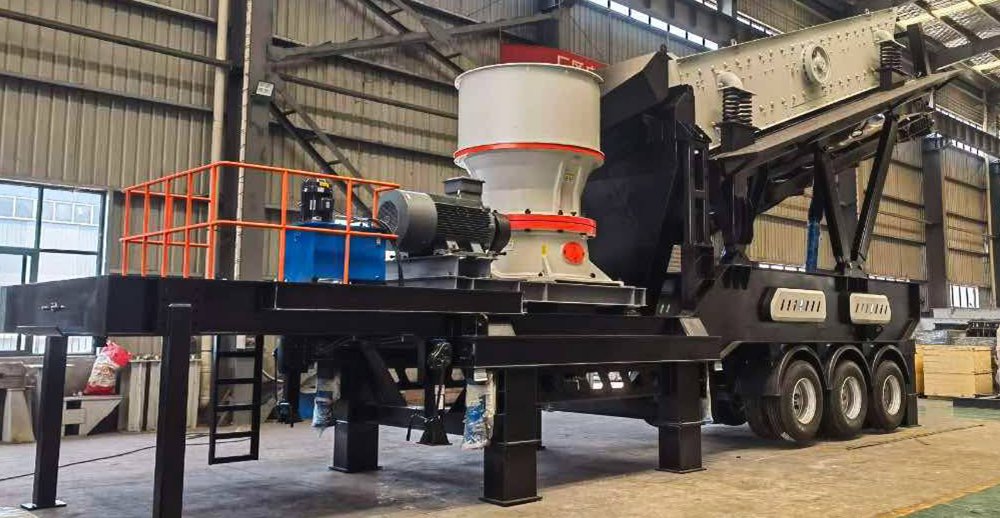
Wheeled mobile crushers utilize a tire-based or vehicle-style chassis and typically require a towing vehicle for long-distance relocation.
They are better suited for:
Sites with good road conditions
Level, solid ground
Sand and gravel yards
Road construction projects
- Construction waste processing sites
- Construction companies that frequently move between project locations
Tracked models focus on “navigating the job site,” while wheeled models focus on “transporting between projects.”
Is a mobile crusher actually the right fit for your project?
The greatest value of a mobile crusher isn’t simply that the equipment *can* move, but rather that it can be driven directly to wherever crushing is needed.
A mobile solution is often worth considering if your project involves:
- Frequent changes in worksite location;
- A mining face that constantly advances;
- A need to process construction waste directly on-site;
- Conditions unsuitable for constructing a permanent foundation;
- Long distances for raw material transport, resulting in high hauling costs;
- A project with a limited lifespan (e.g., a few years), making a permanent production line impractical.
Mobile equipment allows you to bring the crushing process directly to the site, thereby eliminating the need for back-and-forth material transport and the construction of permanent foundations.
However, if you are operating in a fixed mining area with no plans to relocate in the near future, you should also evaluate a stationary production line. Compare factors such as equipment investment, transportation, maintenance, and long-term operating costs before making your final decision.
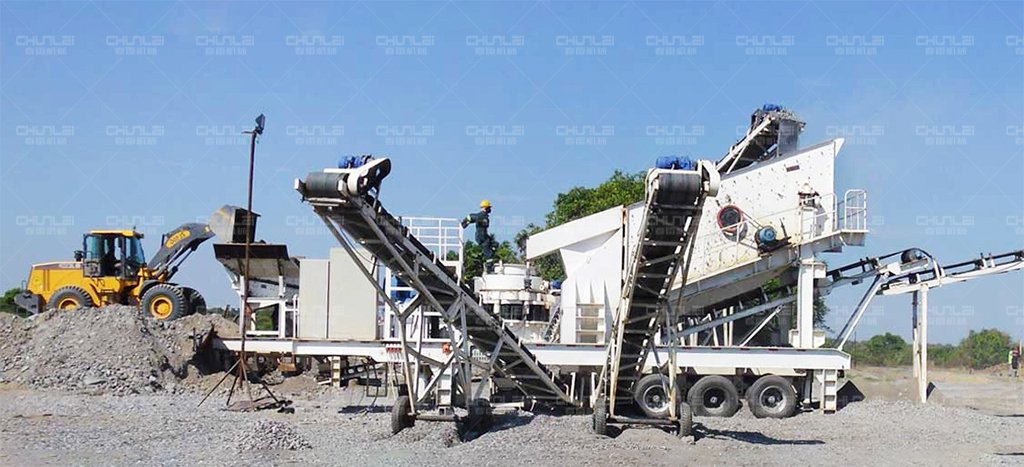
Don't just focus on tracks versus wheels; the choice of the crushing unit itself is equally important.
Once the right chassis is selected, you must also consider the crusher mounted on it.
Hard rock and large-sized material → Mobile Jaw Crusher
If you are processing:
Granite, basalt, ore, or large chunks of construction waste
…a mobile jaw crusher is a strong candidate for primary (coarse) crushing.
Mobile jaw crushers are primarily used in mining, quarrying, and construction waste recycling, capable of handling hard materials such as granite, basalt, and various ores.
Medium-to-soft material + specific requirements for particle shape → Mobile Impact Crusher
If dealing with:
Limestone, concrete, construction waste, or asphalt waste
…and the shape of the finished product is a priority, consider a mobile impact crusher.
CHUNLEI positions the mobile impact crusher for materials of low-to-medium hardness, highlighting its advantages in shaping and producing high-quality manufactured aggregate particles.
Secondary and tertiary crushing of hard rock → Mobile Cone Crusher
If the material has already undergone primary crushing (e.g., by a jaw crusher) and requires further processing of:
Hard materials like granite, basalt, or river pebbles
…then a mobile cone crusher is the next logical choice.
How do you choose between tracked and wheeled crushers?
When choosing between tracked and wheeled mobile crushers, the main factors to consider are how the equipment needs to move, the site’s road conditions, and the frequency of relocation. Don’t simply focus on which type is “more advanced”; the right choice depends on the specific operating conditions.
Tracked vs. Wheeled Mobile Crushers
Comparison Item | Track-mounted Mobile Crusher | Wheeled Mobile Crusher |
Chassis | Crawler tracks | Tires / Vehicle-mounted |
On-site Mobility | Self-propelled | Usually requires a towing vehicle |
Complex Terrain | Better suited | More demanding |
Muddy/Soft Ground | Easier to adapt | May be limited by ground conditions |
Paved Roads | Capable | Better suited |
Intra-mine Relocation | Convenient | Relatively limited |
Inter-project Relocation | Usually requires transport vehicles | Road transport is more convenient |
Typical Scenarios | Mines, quarries, complex construction sites | Roadworks, material yards, multi-project operations |
On-site Maneuverability | High | Moderate |
Key Selection Factors | Terrain and on-site mobility | Road conditions and inter-project transport |
Should you buy a single mobile crusher or a complete mobile crushing line?
It primarily depends on your material, production capacity, and final product requirements.
Buying a single mobile crusher: Suitable for projects involving a single type of material and simple processing steps, or where only primary or secondary crushing is required. It involves a lower investment and offers greater mobility.
Buying a complete mobile crushing line: Suitable for projects requiring a full process of crushing, screening, and product grading. The equipment is well-matched, resulting in more consistent product sizing, though the investment and configuration requirements are higher.
If you simply need to crush stone—consider a single unit.
If you need to transform raw material into a finished product that meets specifications—consider a complete mobile crushing line.
When selecting equipment, do not focus solely on price; also consider feed size, material hardness, target output, final product size, and the frequency of site relocation.
How is the capacity of a mobile crusher determined?
Do not rely solely on the maximum output rating listed on the equipment; actual capacity depends on several key factors:
- Feed size: Larger raw materials place higher demands on the crusher.
- Material properties: Actual capacity varies significantly between hard rock, soft rock, and wet, sticky materials.
- Target output: Determine the required hourly tonnage first, then work backward to select the appropriate equipment model.
- Finished particle size: Finer output requirements usually necessitate additional crushing or screening stages.
- Feed stability: Continuous, uniform feeding is essential for the equipment to operate near its design capacity.
- Crushing process: Actual capacities cannot be directly compared between a standalone primary crusher and a complete production line (comprising primary crushing, fine crushing, and screening).
In short: Determine the required hourly tonnage of qualified finished product first, then select the mobile crusher based on the material, feed size, and product specifications—rather than simply chasing the maximum output figure on the equipment’s nameplate.
What factors influence the price of mobile crushers?
The price of a mobile crusher is not fixed; it depends primarily on the equipment type, processing capacity, material properties, input and output particle sizes, chassis type (tracked or wheeled), power configuration, and whether it is a standalone unit or a complete production line. Additionally, the brand, core components, wear-part specifications, and after-sales service also affect the final quote. Therefore, when comparing prices, one should not look solely at the cost of the equipment itself but should make a comprehensive assessment based on capacity, configuration, and actual production requirements.
Common Misconceptions When Selecting Mobile Crushers
Misconception 1: Track-mounted units are inherently more advanced than wheeled ones.
Not necessarily.
Track-mounted units address challenges related to complex terrain and on-site maneuverability, whereas wheeled units offer advantages in road transport and convenience when moving between multiple project sites.
Misconception 2: Wheeled units are always cheaper than track-mounted ones.
You shouldn’t look at the purchase price alone.
If a project requires frequent operation on muddy or sloped terrain, the costs associated with subsequent site preparation and transport methods must also be factored in.
Misconception 3: Focusing only on the equipment’s maximum output capacity.
Actual output is also influenced by factors such as:
Material properties, feed size, output specifications, feeding stability, and screening capacity.
Misconception 4: Comparing only the equipment price.
You should compare the total cost of ownership, including:
Purchase + Transport + Power + Wear parts + Maintenance + Site relocation + Downtime.
Misconception 5: Focusing only on the chassis while ignoring the entire production line.
If the ultimate requirement involves a process flow like:
Feeding → Jaw Crushing → Impact/Cone Crushing → Screening → Conveying
Then the chassis is merely one component of the system.
CHUNLEI’s mobile systems allow for the modular combination of jaw crushers, impact crushers, cone crushers, screening units, and more, tailored to specific functional needs.
FAQ
Q: Tracked or wheeled mobile crusher—which one should I choose?
A: It primarily depends on the site conditions and mobility requirements. Tracked models are ideal for complex terrain and frequent relocation within a mining area. Wheeled models are worth considering for flat sites with good road conditions and frequent transfers between different projects.
Q: Can a tracked mobile crusher travel on public roads?
A: Generally, tracked equipment is not designed for direct, long-distance highway transport. Relocation usually requires a transport vehicle; specific feasibility depends on the equipment’s dimensions, weight, and local transport regulations.
Q: Are wheeled mobile crushers suitable for mining?
A: Yes, but it depends on the mine’s road and site conditions. If the mine has good roads and relatively flat terrain, and the equipment is primarily moved between different projects, a wheeled solution is a viable option. However, for complex mountainous terrain or muddy working faces, tracked models are the better choice.
Q: Which is easier to move between different job sites?
A: Wheeled equipment is generally more convenient for road transport between different projects or sites. If the equipment mainly needs to be repositioned within a single mine or construction site, the self-propulsion capability of tracked models offers greater value.
Q: Is a tracked mobile crusher always more expensive to operate?
A: Not necessarily. Tracked undercarriages entail maintenance costs for tracks, hydraulics, and power systems, whereas wheeled equipment incurs costs related to tires, towing/transport, and site preparation. Ultimately, the cost per ton should be calculated based on actual operating hours, the frequency of relocation, and energy prices.
Conclusion
When selecting a mobile crusher, the key factors to consider are: where the equipment operates daily, how often and how far it is relocated annually, and the condition of the site’s roads and ground.
If the equipment primarily moves within mines, quarries, mountainous areas, or complex sites, choose a tracked crusher.
If the equipment mainly transfers between multiple project sites with good road conditions, choose a wheeled crusher.
If you are evaluating a project of this type, please provide us with details regarding material hardness, maximum feed size, target output, finished product specifications, power supply conditions, and downstream screening requirements. CHUNLEI will provide you with the most cost-effective mobile crushing solution. Contact us to get a free proposal!
What is a wheeled mobile crusher?
Guide to Buying Mobile Crushers: The Right Choice Saves Money and Peace of Mind
What is the difference between tracked and wheeled mobile crushers? When choosing a mobile crusher, many people prioritize ease of relocation; however, the true measure
Wheeled vs Crawler Mobile Crusher: Which Is Better for Your Project?
In the mining and aggregate industry, cost reduction and efficiency improvement are always the primary concerns. Mobile crushers are gradually replacing stationary crushing plants, but
What Is a Mobile Crusher?
Many people working in the mining, quarrying, or construction industries are familiar with mobile crushers. They often ask themselves, “What is a mobile crusher? Do
