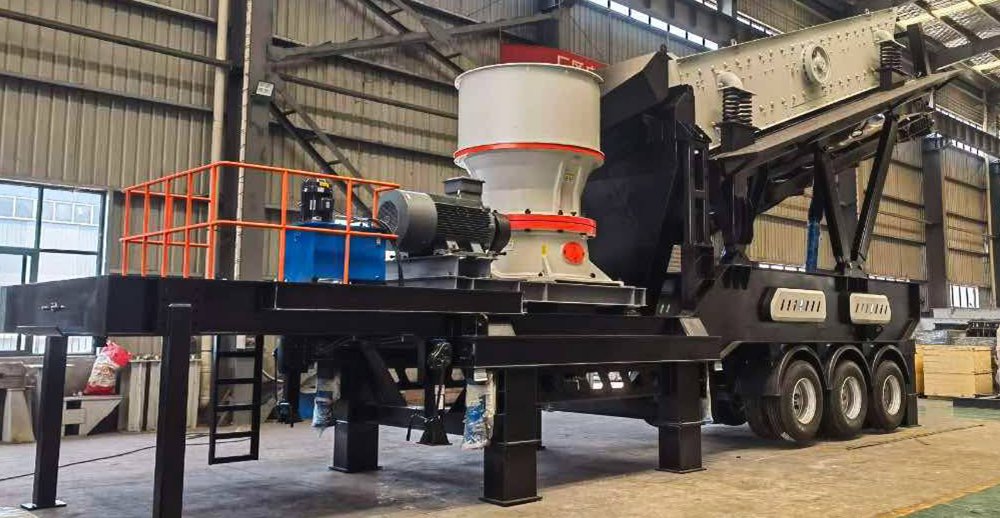
If you’re in the mining, aggregate, or construction industry, you’ve almost certainly come across a jaw crusher—it’s the backbone of primary crushing for hard rock, stone, and ore processing. As a leading manufacturer of mining crushing equipment, Chunlei Machinery has engineered high-performance jaw crushers (including our flagship CJ Series European Jaw Crusher) for global customers, delivering reliable primary crushing for all material types. In this guide, we’ll break down exactly what a jaw crusher is, its core components, how it works, key types, and real-world applications—so you can choose the right jaw crusher for your project.
What Is a Jaw Crusher?
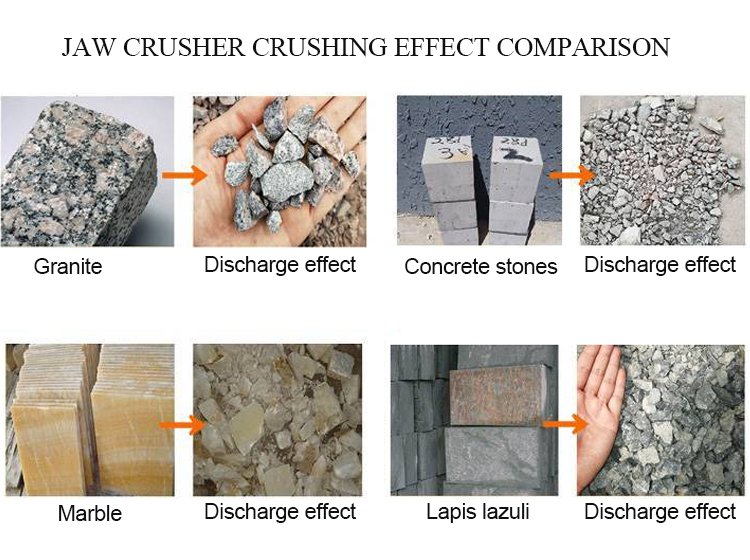
A jaw crusher is a type of primary crushing equipment designed to reduce large, hard raw materials (e.g., rock, ore, concrete, limestone) into smaller, uniform pieces through compressive force. It’s the first step in most crushing production lines, ideal for processing materials with high compressive strength (up to 320 MPa)—making it a staple in mining, quarrying, sand and aggregate production, and construction waste recycling.
Jaw crushers are valued for their simple structure, easy operation, high crushing ratio, and low maintenance cost—perfect for both stationary crushing plants and mobile crushing setups. At Chunlei Machinery, our jaw crushers are fully customizable in feed size, output capacity, and design to match your project’s unique needs, from small-scale quarrying to large-scale mining operations.
Core Components of a Jaw Crusher
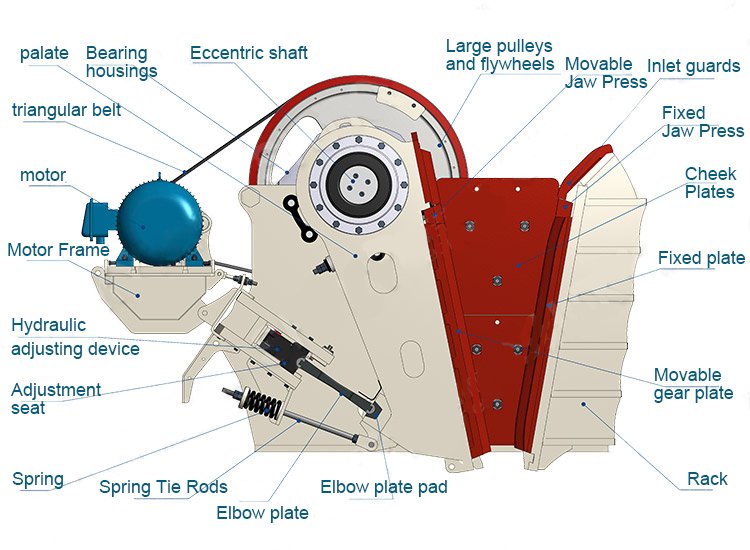
Every jaw crusher operates with a set of essential components that work together to deliver efficient crushing. Understanding these parts helps with operation, maintenance, and troubleshooting—critical for minimizing downtime in your production line. Below are the main components and their core functions:
Feeding Hopper
The top opening where raw material is fed into the crusher. It prevents material spillage and guides large rocks into the crushing cavity, with a rugged design to withstand impact from heavy materials.
Fixed Jaw Plate & Movable Jaw Plate
The two crushing surfaces that compress material. The fixed jaw is stationary to the crusher frame, while the movable jaw moves back and forth—both plates are made of high-wear-resistant alloy steel for long service life (Chunlei’s jaw plates are replaceable and customizable for different materials).
Eccentric Shaft
The “driving heart” of the jaw crusher. It connects to the motor and drives the movable jaw’s reciprocating motion, controlling the crushing frequency and force. Chunlei’s eccentric shafts are forged from high-quality steel for high load-bearing capacity and durability.
Crushing Cavity
The space between the fixed and movable jaw plates, where material is compressed and crushed. The cavity’s shape (e.g., deep cavity design in our CJ Series) increases feeding capacity and reduces energy consumption.
Adjustment Device
Controls the discharge size of the crushed material—you can adjust it to get the exact particle size you need (e.g., 0-50mm, 50-100mm) for your downstream production (e.g., secondary crushing with cone crushers, sand making).
Frame
The heavy-duty steel structure that supports all other components. Chunlei’s jaw crusher frames are welded with thick steel plates and reinforced with ribs to resist vibration and impact during heavy-duty operation.
Discharge Chute
Guides the crushed material out of the crusher to the next step in the production line (e.g., vibrating screen, conveyor belt).
How Does a Jaw Crusher Work?
The jaw crusher’s working principle is based on reciprocating compressive force—it’s a simple, mechanical process that delivers consistent crushing results, even for the hardest materials. Here’s a step-by-step breakdown of how it operates:
Step 1: Material Feeding
Large raw materials (e.g., boulders up to 1500mm in size) are fed into the feeding hopper by a vibrating feeder or conveyor belt, then slide into the crushing cavity under gravity.
Step 2: Compressive Crushing
The motor drives the eccentric shaft to rotate, which causes the movable jaw plate to move back and forth and up and down relative to the fixed jaw plate. When the movable jaw moves toward the fixed jaw, the material in the cavity is compressed, squeezed, and crushed into smaller pieces by the high compressive force.
Step 3: Material Discharge
When the movable jaw moves away from the fixed jaw, the crushed material that has reached the preset discharge size falls through the gap at the bottom of the crushing cavity via the discharge chute. Larger pieces that haven’t been fully crushed stay in the cavity and are re-crushed in the next cycle.
Step 4: Continuous Operation
This reciprocating motion (600-3000 cycles per minute, depending on the model) runs continuously, creating a steady flow of crushed material—making jaw crushers ideal for high-capacity primary crushing production lines.
Main Types of Jaw Crushers (And Which to Choose)
Jaw crushers are classified by their structural design and motion characteristics, with two main types used in industrial production today. Each type has unique advantages and is suited for different materials and project scenarios—Chunlei Machinery offers both types, with customized configurations for global customers:
1. Blake Jaw Crusher (Double Toggle Jaw Crusher)
Design: Features two toggle plates that connect the movable jaw to the frame and eccentric shaft.
Advantages: High crushing force, large feed size, stable operation—ideal for hard rock mining (e.g., granite, basalt, iron ore) and large-scale quarrying.
- Chunlei Application: Our heavy-duty Blake jaw crushers are used for primary crushing in 100TPH+ stone crushing plants.
2. Dodge Jaw Crusher (Single Toggle Jaw Crusher)
Design: Features a single toggle plate that directly connects the eccentric shaft to the movable jaw—simpler structure and lighter weight.
Advantages: Compact size, high crushing frequency, easy installation—ideal for small to medium-scale projects, mobile crushing plants, and construction waste recycling.
- Chunlei Highlight: Our CJ Series European Jaw Crusher is an upgraded single toggle jaw crusher with European design standards, combining compactness with high performance for both stationary and mobile setups.
Key Applications of Jaw Crushers
Jaw crushers are the most versatile primary crushing equipment in the mining and aggregate industry, with a wide range of real-world applications. Their ability to process hard, abrasive, and irregular materials makes them indispensable for the following scenarios:
-
Mining Industry: Primary crushing of ore (iron ore, copper ore, gold ore) and hard rock (granite, basalt, diabase) for mineral processing.
-
Quarrying & Aggregate Production: Crushing limestone, dolomite, and sandstone to produce aggregate for concrete, asphalt, and road construction.
Construction Industry: Recycling construction waste (concrete, brick, stone) into reusable aggregate for on-site building projects.
Infrastructure Projects: Primary crushing for road, bridge, and dam construction—providing crushed stone for foundation and structural materials.
Cement Industry: Crushing limestone and clay raw materials for cement production lines.
Chunlei’s jaw crushers are used in over 50 countries for these applications, with customized solutions for different material types, output capacities (5-800 TPH), and project scales (stationary/ mobile, small/ large).
Why Choose Chunlei Machinery’s Jaw Crushers?
As a professional mining equipment manufacturer with
30+ years of experience, Chunlei Machinery’s jaw crushers are engineered for global customers with high performance, reliability, and cost-effectiveness. Here’s what sets our jaw crushers apart:
Customizable Design: Feed size, output capacity, discharge size, and color can be fully customized to match your project needs.
High Efficiency & Energy Saving: Optimized crushing cavity and eccentric shaft design for higher output and lower energy consumption.
Durable & Low Maintenance: High-wear-resistant parts and simple structure reduce downtime and maintenance costs.
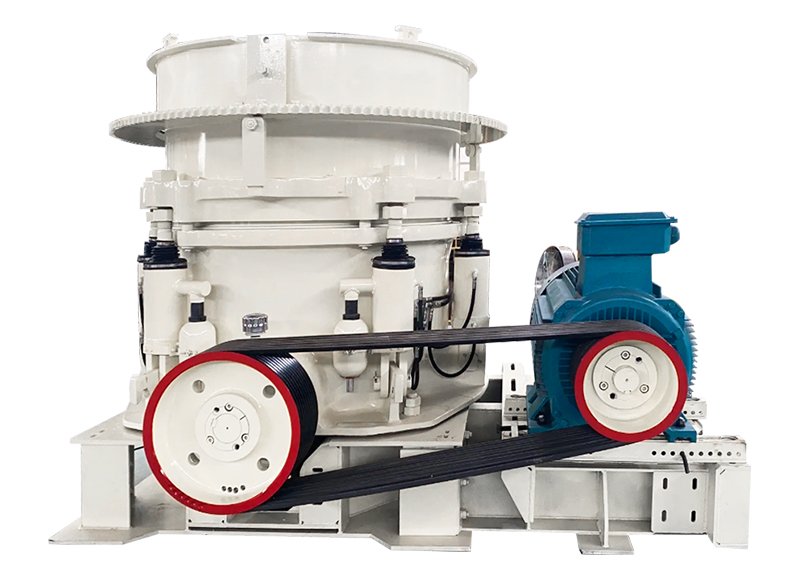
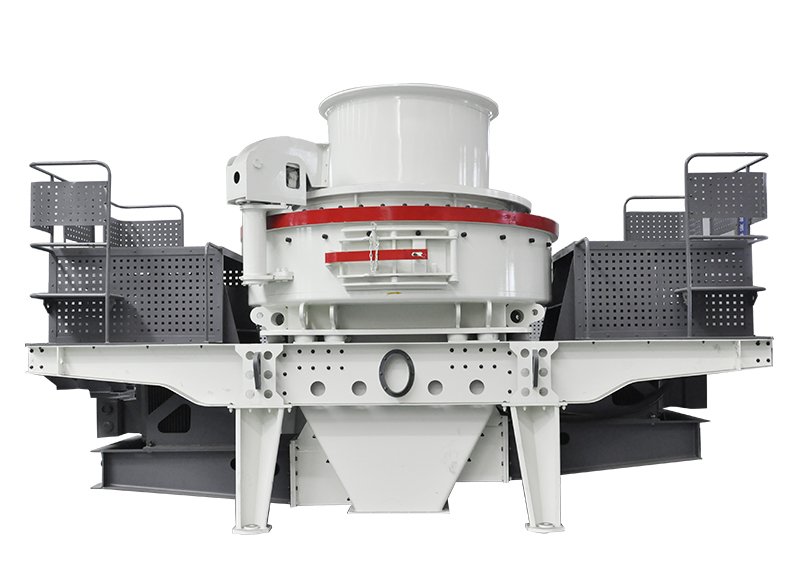
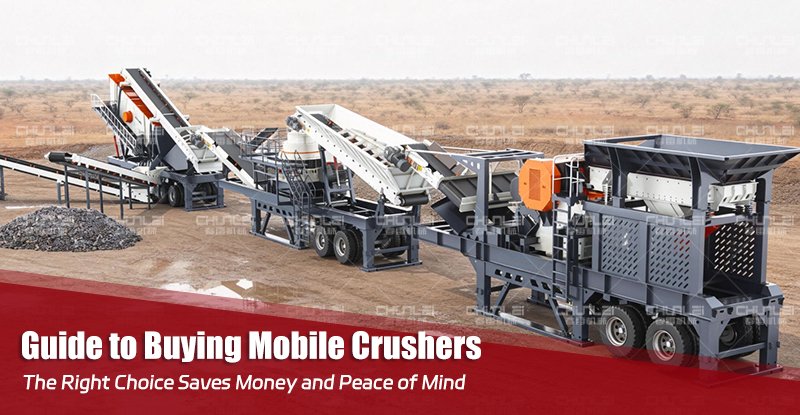
Full Production Line Integration: We provide complete crushing line solutions (jaw crusher + cone crusher + impact crusher + vibrating screen + conveyor) for stationary and mobile setups—one-stop service from design to installation.
Global After-Sales Support: Our team provides technical support, part replacement, and on-site installation guidance for customers worldwide.
FAQ About Jaw Crushers
Q1: What is the maximum compressive strength a jaw crusher can process?
A: Chunlei’s jaw crushers can process materials with a compressive strength of up to 320 MPa, suitable for all hard and medium-hard rocks and ores.
Q2: Can a jaw crusher be used in a mobile crushing plant?
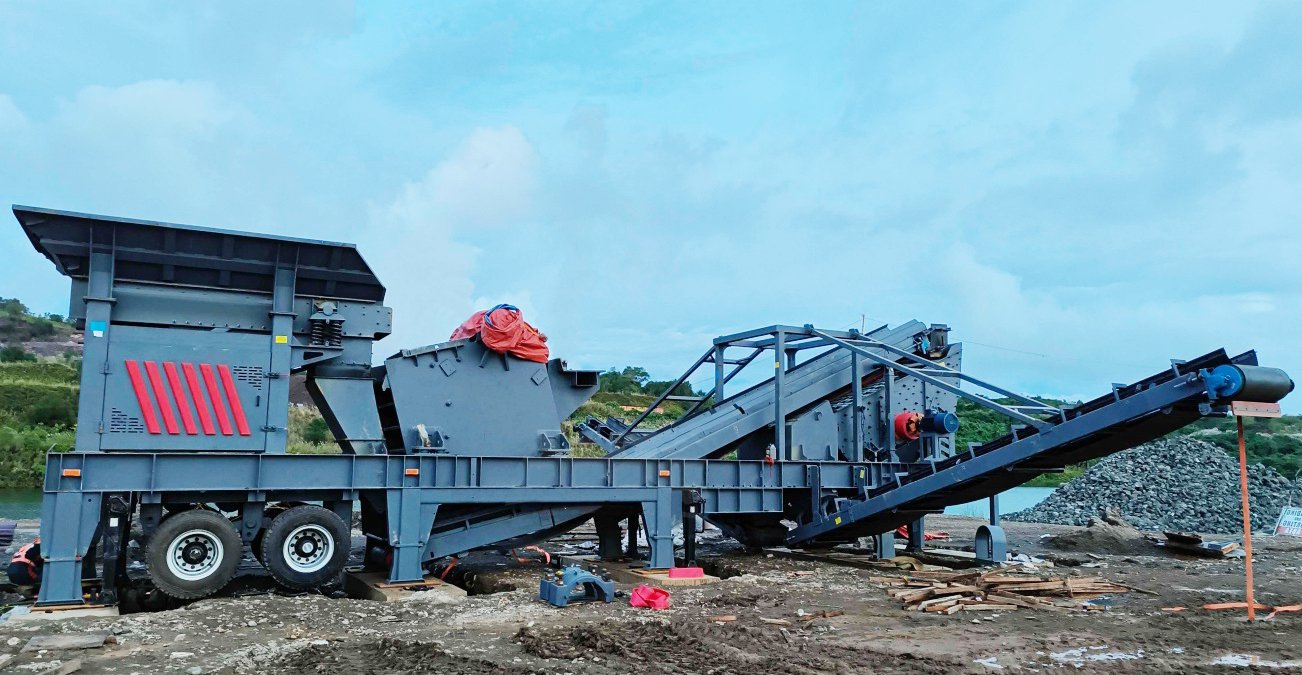
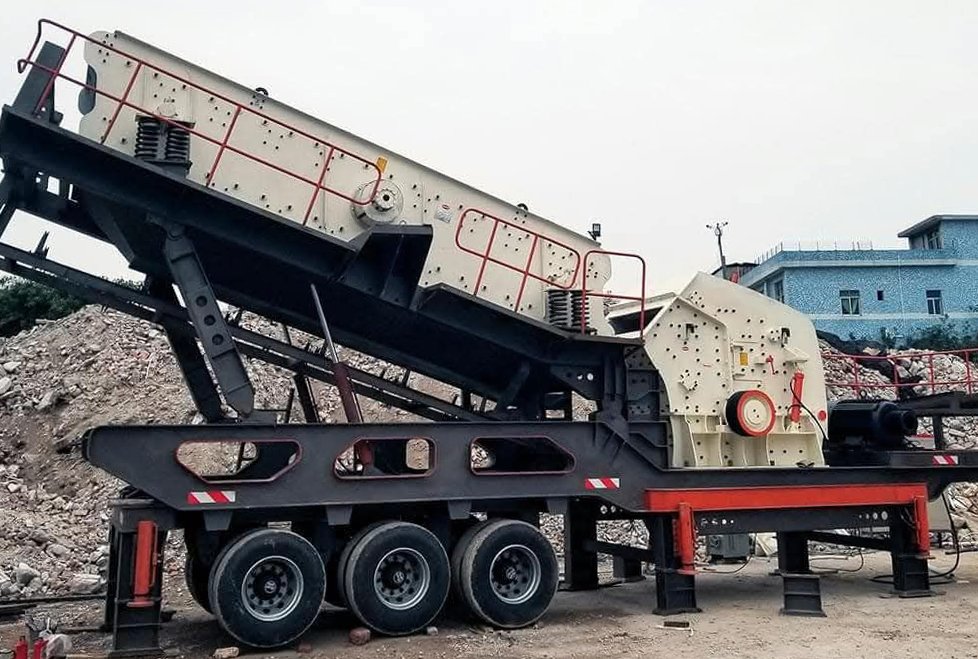
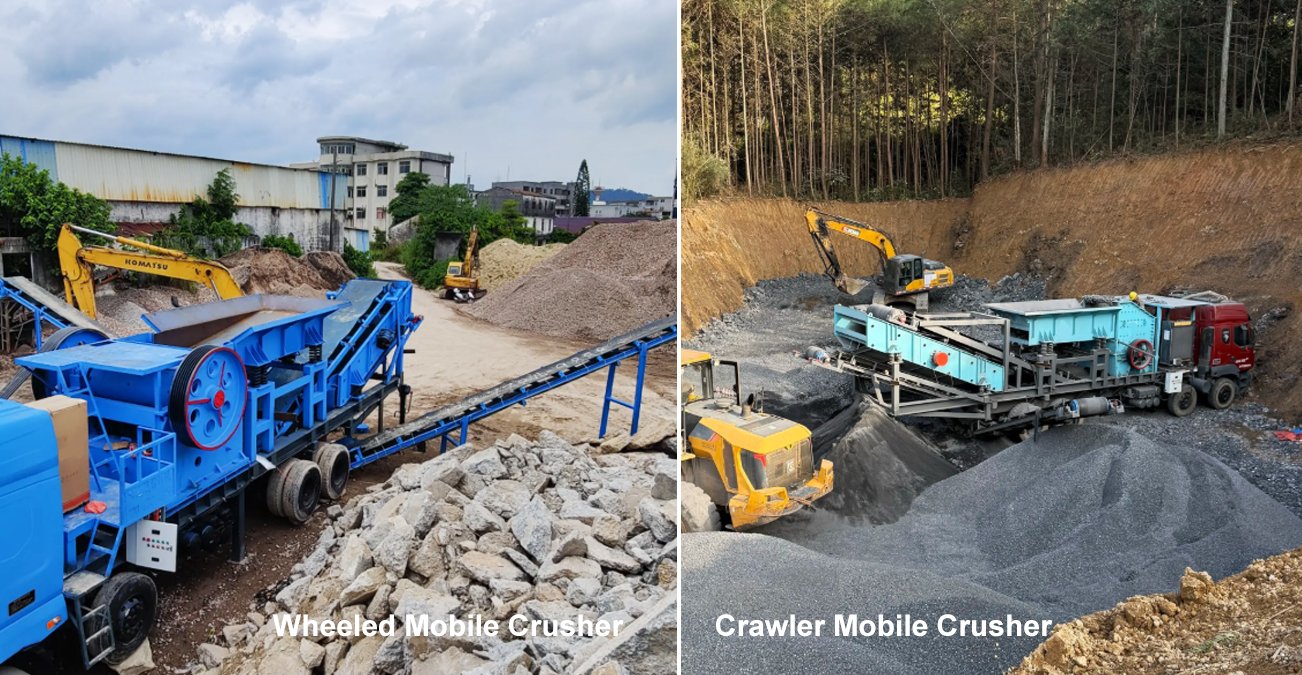
A: Yes—we offer wheeled and crawler mobile jaw crushing plants, which are portable and ideal for on-site crushing (e.g., construction waste recycling, road construction).
Q3: How do I adjust the discharge size of a jaw crusher?
A: Our jaw crushers are equipped with a simple adjustment device (wedge or hydraulic) that allows you to easily adjust the discharge gap to get the desired particle size—no complex tools required.
Q4: What is the service life of Chunlei’s jaw plates?
A: Our high-wear-resistant alloy steel jaw plates have a service life 30% longer than traditional plates, and we offer genuine replacement parts for long-term use.
Conclusion
A jaw crusher is the fundamental primary crushing equipment for any mining, aggregate, or construction project—its simple working principle, rugged design, and versatile applications make it a must-have for reducing large raw materials into processable pieces. Whether you need a stationary jaw crusher for a large quarry or a mobile jaw crusher for on-site construction, Chunlei Machinery has the right solution for you.
Our CJ Series European Jaw Crusher and custom jaw crushing solutions are designed to deliver high efficiency, low maintenance, and long service life—helping you maximize your production output and minimize costs. If you’re ready to choose a jaw crusher for your project, we’re here to help with expert advice, customized design, and a free quote.
Get Your Custom Jaw Crusher Solution Today
If you need to select the right jaw crusher model, confirm the output capacity, or get a free quote & customized crushing line design, send us your project details now:
- Material type (e.g., granite, limestone, ore)
- Feed size and desired discharge size
- Required output capacity (e.g., 50 TPH, 200 TPH)
- Project type (stationary crushing plant / mobile crushing plant)
Contact Chunlei Machinery:
We will reply to you within 24 hours and provide the best jaw crusher proposal and price for your project!