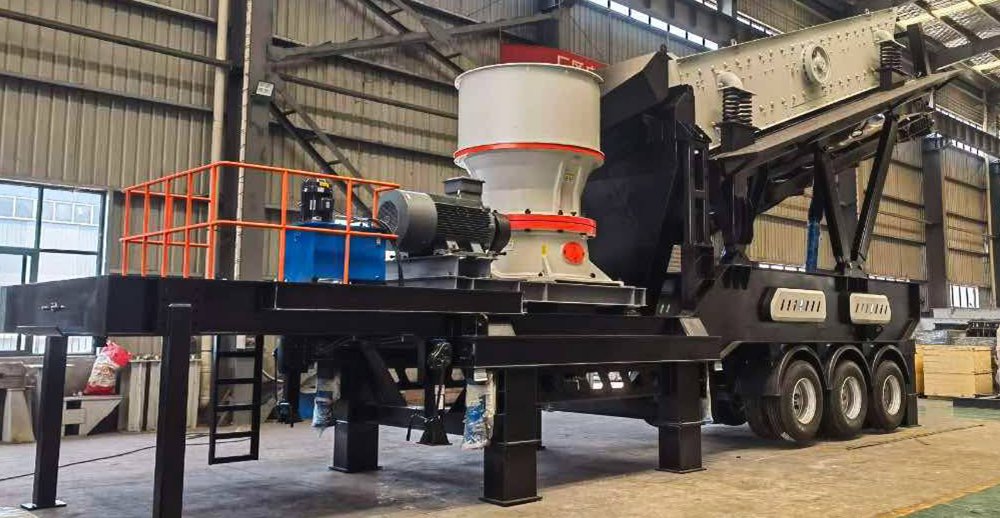
If you are involved in the mining, quarrying, or sand-making industries, you are likely no stranger to impact crushers. If you are seeking equipment capable of producing superior particle shape, achieving a higher crushing ratio, and minimizing operational issues when processing wet or sticky materials, the impact crusher is undoubtedly your optimal choice.
But how exactly does an impact crusher work? And is it truly the right fit for your specific production needs? This article will reveal all the answers.
What Even is an Impact Crusher?
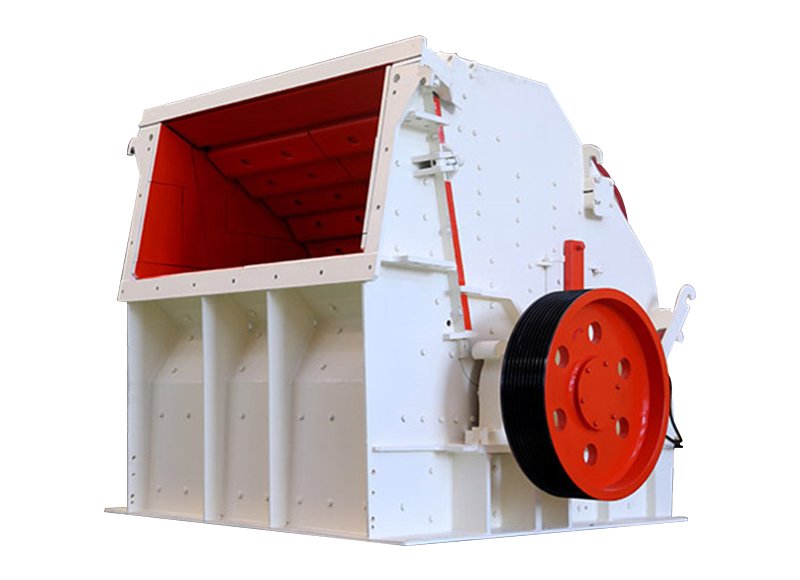
An impact crusher is a piece of mechanical equipment that utilizes high-speed impact force—rather than relying solely on compressive action, as is the case with jaw crushers or cone crushers—to break down rocks, stones, and other materials.
This type of equipment is ideally suited for sand making, the production of fine aggregates, or the shaping of stone materials; moreover, for certain specific materials, their crushing performance is far superior to that of jaw or cone crushers.
How Does an Impact Crusher Work?
Let me walk you through the process step by step.
1. Step One: Feeding
Raw materials are loaded into the feed hopper of the impact crusher. These materials can range from rocks, limestone, and river pebbles to even construction waste—essentially, any material you need to break down into smaller pieces or process into sand can be used.
It is crucial *not* to feed in oversized materials (we will specify the maximum size limits our machines can handle shortly); doing so can cause the machine to jam, thereby reducing operational efficiency. Most of our clients utilize small conveyors or feeders to ensure a steady, uniform feed, which helps guarantee smooth machine operation.
2. Rotor Rotation (The Machine’s “Engine”)
Inside the impact crusher lies a massive, heavy rotor (somewhat resembling giant fan blades) that spins at extremely high speeds—reaching rotational speeds of 1,000 to 1,500 revolutions per minute (RPM). Once the machine is switched on, this rotor takes just a few short minutes to accelerate to its full rated speed.
This rotor is the very core of the impact crusher. It is responsible for generating the “impact” force we mentioned earlier. Chunlei impact crushers are equipped with reinforced rotors, ensuring they resist wear and tear effectively, even when crushing exceptionally hard materials.
3. Impact Plates
Surrounding the rotor are sturdy, durable impact plates (which are securely fixed to the machine’s frame). These impact plates are robust enough to withstand violent, high-force collisions.
As the rotor spins at high velocity, it scoops up the material from the feed hopper and hurls it with tremendous force against the impact plates. Upon impact, the material instantly shatters into smaller particles and is then ricocheted back toward the rotor zone. This repetitive cycle of impact and rebound continues until the material particles become fine enough to pass smoothly through the discharge gap located at the bottom of the machine.
4. Adjusting Particle Size
Looking for finer sand? Or perhaps larger-sized aggregates suitable for construction projects? No problem—it is all entirely achievable. Most impact crushers (including the equipment we manufacture) are equipped with an adjustment mechanism that allows you to modify the gap between the impact plate and the rotor.
By narrowing the gap, you can produce extremely fine sand; conversely, widening the gap yields larger-grained, coarser-textured material. The operation is remarkably simple—requiring no tools and involving no cumbersome setup procedures. You can effortlessly complete the adjustment simply by turning the adjustment handle or operating the hydraulic system.
5. Collecting the Finished Product
Once the material has been crushed to your desired particle size, it falls through the gap onto a conveyor belt or into a collection bin located beneath. At this point, the entire process is complete—you have successfully obtained your finished sand, aggregates, or shaped stone, ready for immediate use or commercial sale.
What Materials Work Best with an Impact Crusher?
For certain specific materials, impact crushers outperform both jaw and cone crushers. Let’s take a closer look—understanding this distinction is crucial for ensuring you select the right equipment for your needs.
Impact crushers are the ideal choice for the following applications:
Soft to medium-hard materials (such as limestone, dolomite, river pebbles, construction waste, etc.)
The production of manufactured sand or fine aggregates (highly suitable for use in concrete, asphalt paving, or landscaping projects)
Stone shaping and finishing (imparting a smooth, cubical shape to the stone—a significant advantage in terms of marketability)
However, for extremely hard materials—such as granite or basalt—impact crushers are not the optimal choice (for these materials, cone crushers are generally recommended). Yet, if the materials you are processing fall into the categories mentioned above, choosing an impact crusher will save you a significant amount of both time and money.
Our Top Chunlei Impact Crushers
At Chunlei, our impact crushers are built for real-world operations—no gimmicks, just reliable machinery that performs consistently, day in and day out. Here are two of our most popular models:
1. PF Series Impact Crusher (A Best-Seller for Sand Production)
This is our most popular model—perfectly suited for small to medium-sized sand production plants or quarries. It is easy to operate, requires minimal maintenance, and produces high-quality sand.
Feed Size: Max. 500mm (No need to pre-crush smaller rocks)
Production Capacity: 10–200 tons/hour (Select the capacity that meets your specific sand production needs)
Discharge Size: 0–50mm (Adjustable—capable of producing both fine sand and coarse aggregates)
Motor Power: 30–160 kW (Energy-efficient design helps you save on electricity costs)
Applications: Sand production using river pebbles, limestone, and construction waste
2. PFY Series Hydraulic Impact Crusher (Heavy-Duty Equipment Built for Large-Scale Projects)
If you operate a large-scale quarry or sand production plant, this machine is the ideal choice for you. It is specifically designed to process high volumes of material, offering extended operating hours and extremely low downtime for maintenance.
Feed Size: Max. 800mm (Easily handles larger rock sizes)
Production Capacity: 50–500 tons/hour (Perfectly suited for engineering projects with high output demands)
Discharge Size: 0–60mm (Adjustable; features a hydraulic control system for easy configuration)
Motor Power: 110–315 kW (Heavy-duty power configuration combined with high energy efficiency)
Applications: Large-scale sand production, aggregate manufacturing, and quarrying operations
Why Choose Chunlei Impact Crushers?
Over the years, I have witnessed countless impact crushers in operation—and this is precisely why our customers consistently return to make repeat purchases:
Robust Durability: Both our impact plates and rotors are manufactured using high-wear-resistant specialty steel, extending their service life by 30% compared to lower-cost alternatives.
Ease of Maintenance: The internal structure contains no complex components; should a malfunction occur, you can easily replace damaged parts yourself (though, of course, we are also available to dispatch technicians to assist you on-site).
High Customizability: We can specifically tailor and optimize the equipment to meet your exact requirements—including feed size, processing capacity, and discharge size.
Comprehensive Support: We provide 24/7 technical support to assist you around the clock.
FAQs (The Questions I Get Asked Most)
Q: Is an impact crusher hard to operate?
A: Nope! Most of our customers learn to use it in 10 minutes. It’s just load the material, set the size, and let it run.
Q: Can it work with construction waste?
A: Absolutely! It’s one of the best machines for crushing concrete, bricks, and other construction waste into reusable aggregates.
Q: How often do I need to replace parts?
A: It depends on what you’re crushing, but most parts last 6-12 months. We sell genuine replacement parts, so you never have to wait.
Conclusion: Planning for Success in 2024
Selecting the right crusher involves considering numerous factors; if you are unsure how to choose, let us handle it for you.
Get a free, customized impact crushing solution from Chunlei today! Simply tell us the type of material you need to crush, your required output capacity, and your specifications for the finished product’s grain size. Within 24 hours, we will recommend the ideal machine model for your needs and provide a complimentary quotation.