
What Is Cone Crusher Used For? A Full Guide to Cone Crusher Applications
While cone crushers are well-known in the mining, quarrying, construction, and mineral processing industries, many customers may not fully understand their applications and functions. Unlike jaw crushers (primary crushing equipment), cone crushers are specifically designed for secondary and tertiary crushing. They deliver uniform particle sizes and high crushing efficiency, and excel at processing hard and abrasive materials.
As a professional manufacturer of mining and crushing equipment with over 30 years of industry experience, Chunlei Machinery designs and manufactures high-performance cone crushers for customers worldwide. In this guide, we will provide a detailed analysis of all application scenarios, key operating modes, and suitable materials for cone crushers, as well as our top recommended models and their detailed specifications, to help you determine whether a cone crusher is the right choice for your project.
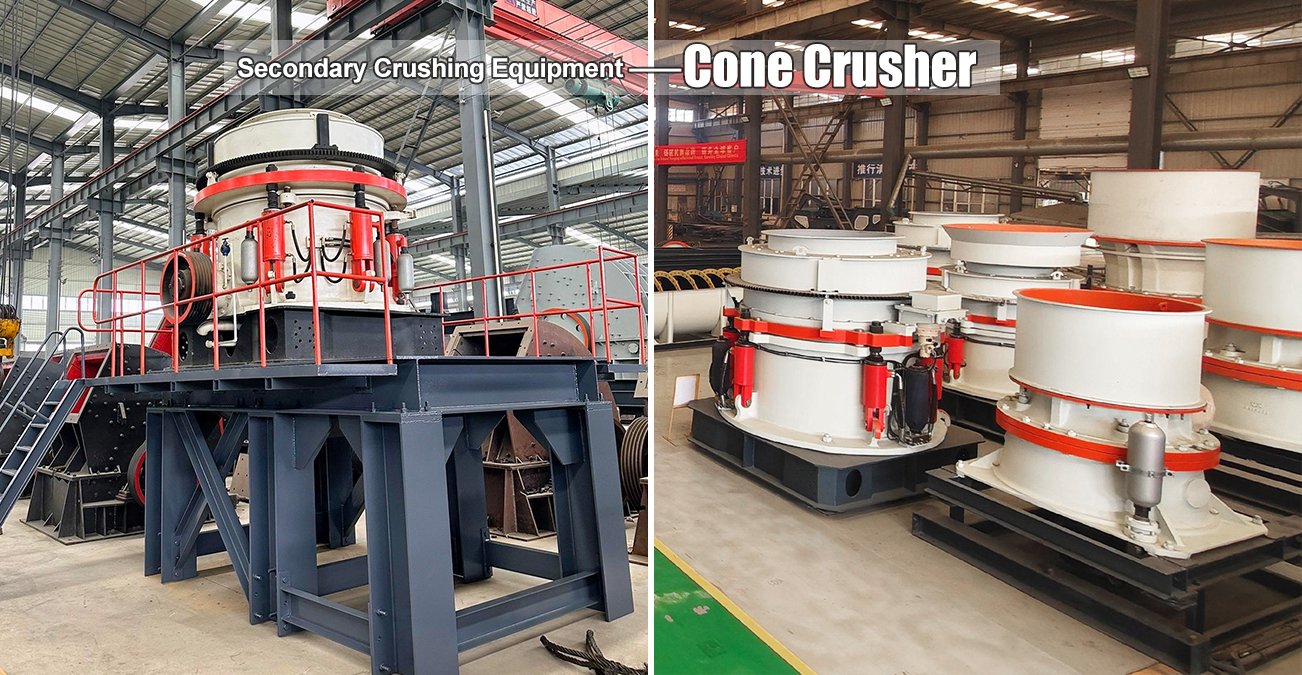
What is a cone crusher?
A cone crusher is a compression-type crusher that uses a rotating outer cone (moving cone) and a concave cone (fixed cone) to compress and crush material, reducing it to smaller, uniformly sized particles. It features a deep crushing chamber, a hydraulic adjustment system, and overload protection, enabling it to efficiently process materials ranging from medium-hard to extremely hard.
The core advantages of cone crushers include: uniform particle shape, low wear costs, high crushing ratio, automatic adjustment, and suitability for continuous heavy-duty operations—these are the key factors that make cone crushers irreplaceable.
What are the applications of cone crushers?
Cone crushers are versatile machines widely used across various industries, primarily for medium and fine crushing following primary crushing. The following are the most common and in-demand applications:
1. Mining Industry (Hard Ore Crushing)
These are the primary applications of cone crushers. The various types of hard ore extracted during mining operations have high compressive strength, and cone crushers are the equipment of choice for medium and fine crushing of hard rock, preparing suitable feedstock for subsequent grinding and mineral separation processes.
Common ores: iron ore, copper ore, gold ore, silver ore, manganese ore, phosphate ore, and other metallic and non-metallic ores
Application advantages: High wear resistance, capable of processing high-hardness ores with minimal downtime, and capable of producing ore particles that meet mineral processing requirements
2. Aggregate and Quarrying Production
The high-quality crushed stone and sand produced by cone crushers are primarily used in quarries and aggregate plants. Since jaw crushers produce relatively large rock particles, cone crushers further process these larger particles into standard-sized aggregates to meet the strict particle size requirements of construction projects.
Common Raw Materials: Granite, basalt, diabase, limestone, dolomite, river gravel.
Final Products: Graded aggregates in 5-10 mm, 10-20 mm, and 20-30 mm sizes suitable for roads, bridges, construction, and concrete mixing.
- Key Advantages: Produces cubic-shaped aggregates with high compressive strength that meet international construction standards.
3. Construction Waste Recycling
As the world pays more attention to environmental protection, recycling construction waste has become a major trend. Cone crushers can turn waste concrete, bricks and stones into reusable recycled aggregates. This not only cuts down on waste but also helps lower project costs.
Suitable for:construction demolition waste, road renovation waste, concrete blocks and brick fragments. Thanks to the hydraulic system, the crusher is well protected from damage caused by unbreakable materials like steel bars.
4. Railway & Highway Construction
Infrastructure projects require large quantities of high-standard crushed stones for roadbeds and pavement layers. Cone crushers produce uniform, high-strength aggregates that ensure road stability and service life, making them essential for railway and highway construction projects worldwide.
5. Cement & Building Materials Industry
Cone crushers crush raw materials like limestone, clay, and slag into fine particles for cement production and brick making. Their stable output and adjustable discharge size ensure continuous supply of raw materials for large-scale cement plants.
What Materials Can a Cone Crusher Process?
Cone crushers are specially designed for hard and abrasive materials (compressive strength up to 350MPa), which is the biggest difference from impact crushers. Here’s a clear material classification:
Highly Recommended Materials: Granite, basalt, diabase, iron ore, copper ore (high hardness, strong abrasiveness)
Suitable Materials: Limestone, dolomite, sandstone, river stone, construction waste (medium hardness)
Not Recommended: Soft materials like coal, clay, gypsum (low efficiency, easy to block the crushing chamber)
Chunlei Recommended Cone Crusher Models & Detailed Parameters
Chunlei Machinery offers two high-performance cone crusher series to meet different application needs: HPT Hydraulic Cone Crusher (high-efficiency type) and CS Symons Cone Crusher (heavy-duty type). Both series feature stable operation, low wear, and customizable configurations, with detailed parameters below:
1. HPT Hydraulic Cone Crusher (Top Recommendation)
Model | Feed Size (mm) | Discharge Size (mm) | Capacity (TPH) | Motor Power (Kw) |
|---|---|---|---|---|
HPT200 | ≤100 | 8-25 | 55-180 | 160 |
HPT300 | ≤150 | 8-30 | 90-280 | 220 |
HPT500 | ≤200 | 10-35 | 150-450 | 315 |
2. CS Symons Cone Crusher (Heavy-Duty Type)
Model | Feed Size (mm) | Discharge Size (mm) | Capacity (TPH) | Motor Power (Kw) |
|---|---|---|---|---|
CSB75 | ≤64 | 6-18 | 30-90 | 55 |
CSD240 | ≤143 | 8-25 | 80-240 | 132 |
CSE300 | ≤190 | 10-30 | 120-350 | 160 |
Why Choose Chunlei Cone Crushers?
High Wear Resistance: Mantle and concave made of high manganese steel alloy, service life extended by 30%
Hydraulic Protection: Automatic avoidance of uncrushable objects, reducing equipment failure rate
Uniform Particle Size: Optimized crushing cavity design, produces cubic aggregates with high qualification rate
Custom Solutions: Match with jaw crushers, vibrating screens to form complete production lines
Global After-Sales: 24-hour technical support, on-site installation and maintenance guidance
FAQs About Cone Crusher Applications
Q: Can a cone crusher be used as primary crushing equipment?
Q: What’s the difference between cone crusher and impact crusher?
Q: Can cone crushers work in mobile crushing plants?
Conclusion: Planning for Success in 2024
To sum up, cone crushers are mainly used for secondary and tertiary crushing of hard ores, rocks, and construction waste, playing a vital role in mining, aggregate production, infrastructure construction, and waste recycling. Choosing the right cone crusher model can greatly improve your production efficiency and reduce long-term costs.
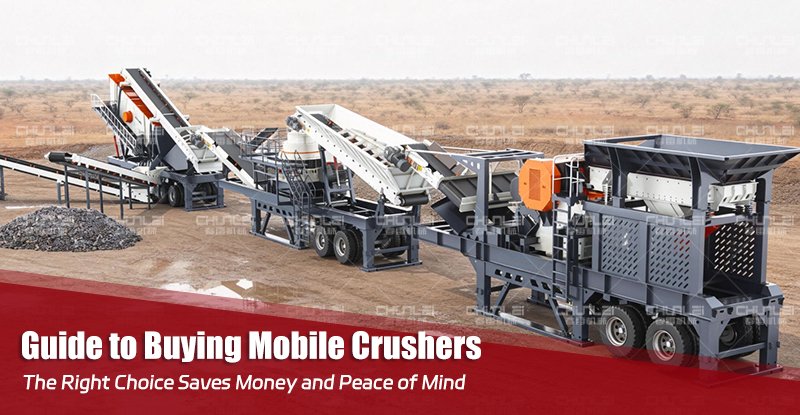
Guide to Buying Mobile Crushers: The Right Choice Saves Money and Peace of Mind
What is the difference between tracked and wheeled mobile crushers? When choosing a mobile crusher, many people prioritize ease of relocation; however, the true measure
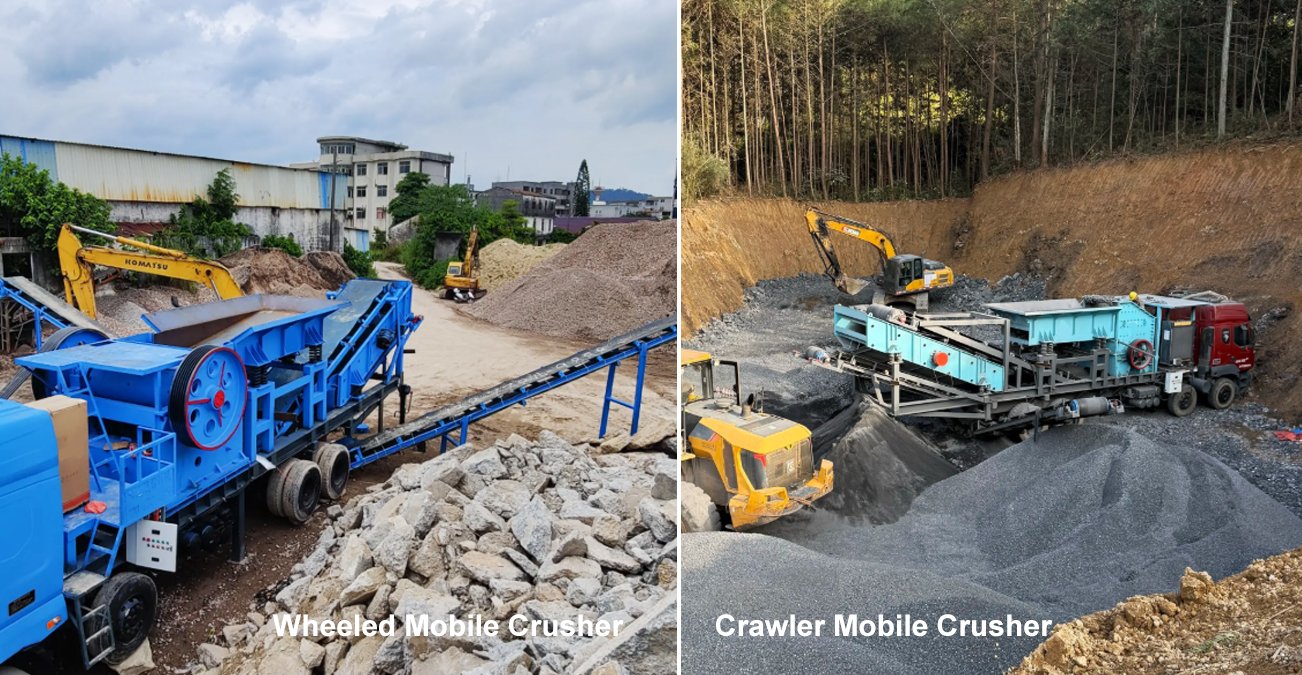
Wheeled vs Crawler Mobile Crusher: Which Is Better for Your Project?
In the mining and aggregate industry, cost reduction and efficiency improvement are always the primary concerns. Mobile crushers are gradually replacing stationary crushing plants, but
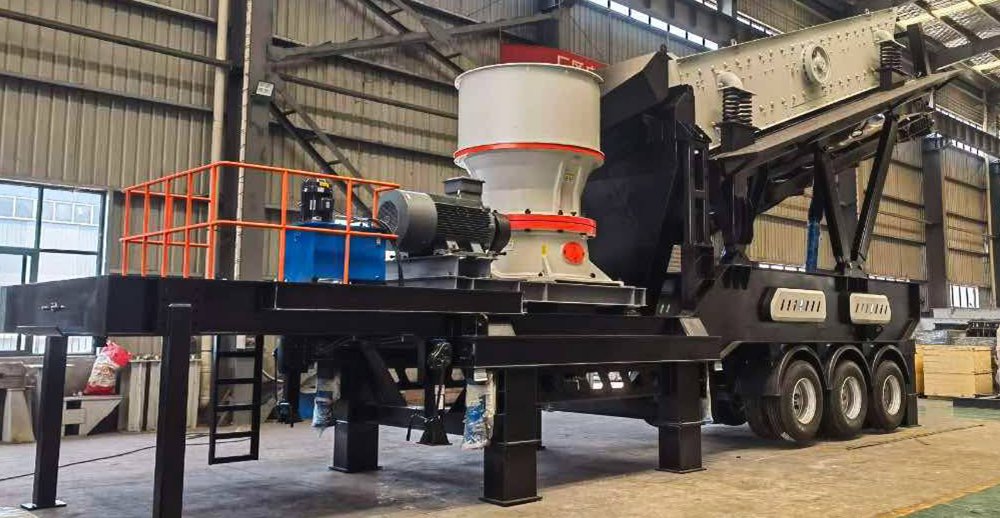
What Is a Mobile Crusher?
Many people working in the mining, quarrying, or construction industries are familiar with mobile crushers. They often ask themselves, “What is a mobile crusher? Do
